

There’s no one right way to parent. And there’s definitely no one approach that works for every child.
What I’ve learned, both as a parent and through more than 20 years of working with families, is that things start to shift when we stop asking only, How do I get my child to stop doing this? and start getting curious about what might be going on underneath the behavior.
That doesn’t mean letting everything go or not setting limits.
It means trying to understand our kids and still guiding them.
My approach draws from Positive Discipline, brain science, child development and research-informed practices. And then we figure out what all of that actually looks like with your child and your family.
Looking Beneath the Behavior 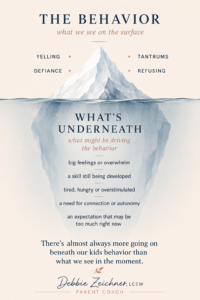
Behavior is what we see. It isn’t always the whole story.
A child who’s refusing, melting down or arguing may be overwhelmed, struggling with a skill, needing more autonomy or simply having a much harder time doing what’s being asked in that moment.
Sometimes their nervous system is overwhelmed and they need our help calming. Other times they need connection, support or more time to develop a skill.
And sometimes they just need us to hold the limit. 😉
Connection AND Boundaries
This is one of the things I love most about Positive Discipline and something that’s become foundational to the way I work.
We don’t have to choose between being loving and setting limits.
Kids need connection, empathy and a sense that we’re on their side. They also need boundaries, guidance and parents who can confidently say, I know you don’t like this, and the answer is still no.
That’s what being kind AND firm means to me.
It isn’t permissive parenting and it isn’t about controlling kids. It’s about staying connected while still being the parent.
Discipline Is About Teaching
Of course we want the hitting to stop. We want our kids to listen, get out the door and stop fighting with their sibling.
I do too. 😊 
But discipline isn’t only about stopping behavior in the moment. At its heart, it’s about teaching and guiding.
Instead of punishing kids for skills they don’t have yet, we can help them develop the skills they’ll need to navigate life…handling disappointment, managing big feelings, solving problems, taking responsibility and working through conflict.
That doesn’t mean we don’t set limits or hold our kids accountable.
It means we’re thinking beyond How do I make this stop? and asking, What does my child need to learn here?
And those skills take time, practice and plenty of mistakes along the way.
And…We Look at Ourselves Too
Our kids have an incredible way of bringing our own stuff right to the surface.
Sometimes the intensity of our reaction isn’t only about what our child is doing. It may connect to how we were parented, what we believe our kids “should” be doing or fears about what their behavior means.
There’s no blame in that. We all bring our own history into parenting.
Becoming more aware of those patterns gives us a little more space to choose how we want to respond instead of automatically falling into the same reactions again and again.
And no, none of this means staying perfectly calm or getting it right all the time.
Thank goodness. 😉
It’s about understanding our kids better, understanding ourselves a little better too and feeling more confident handling the hard moments when they come.